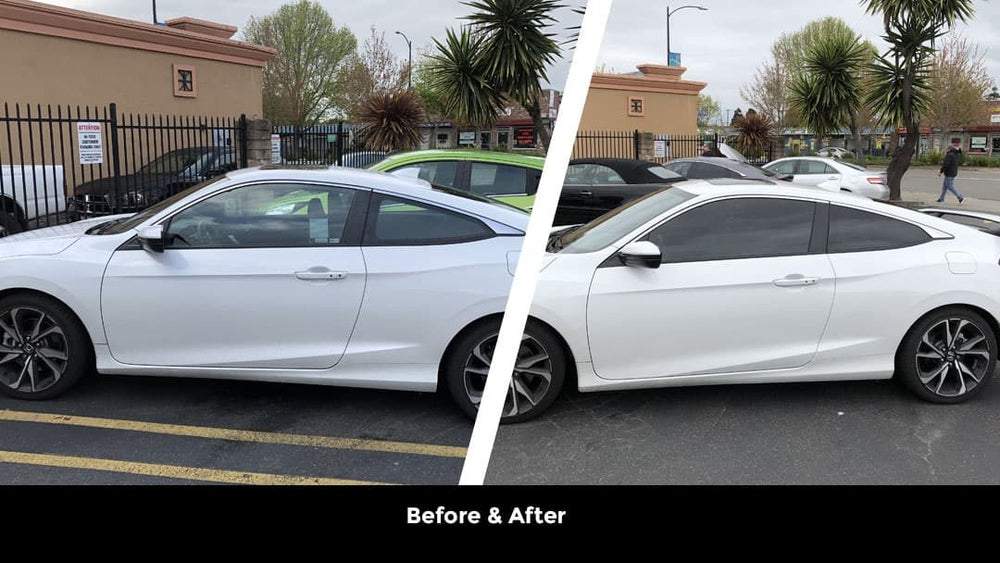
Window tint can be worthwhile for a Las Vegas car that spends time in direct sun, but the best choice depends on legal visibility, the exact film and installation quality. A garage-kept car used mainly at night has different needs from one parked outside all day. Start with that routine before comparing a DIY kit with a professional quote.
Decide what problem you are paying to solve
Glare during an afternoon drive on the 215, direct sun on a passenger’s side, privacy while parked and a very hot steering wheel are related problems, but they are not identical. A removable windshield shade can help while parked. Film remains in place while driving. Covered parking reduces direct exposure without changing your windows.
If the air conditioning is weak or the engine has cooling problems, fix those first. Window film is an optional comfort improvement, not a mechanical repair. It also cannot make leaving a child or pet in a parked car safe.
DIY price: compare the complete project
As checked on October 4, 2026, MotorPeak Supply’s sides-and-rear DIY tint kit had a listed base price of $79.99. That is a dated product price, not a guaranteed checkout total or a quote for installation. Confirm current options, taxes and shipping before buying.
The listed kit is nano-carbon dyed film for a confirmed vehicle pattern. It is not ceramic, and it does not include installation or tools. Its optional full-windshield item is separate; availability for purchase does not establish Nevada legality. Pattern availability must be confirmed for your vehicle.
Your full DIY cost may also include application tools, cleaning supplies, old-film removal, replacement pieces after mistakes, and your time. Pre-cut pieces reduce the cutting work; they do not eliminate cleaning, careful application or the possible need to heat-shrink film on curved glass. Plan a clean, sheltered workspace rather than trying to install in a windy, dusty parking lot.
Professional cost: get a written scope, not a vague “whole car” price

We have not obtained a current written quote for your vehicle from a Las Vegas shop, so we are not presenting an invented local average. Request comparable quotes from installers using the same window coverage and identified film series. A premium ceramic installation and a film-only dyed-carbon kit are different purchases.
- Which side windows, quarter windows and rear glass are included?
- What is the film manufacturer and exact series?
- What finished front-window VLT is expected on this vehicle?
- Are old-film removal, tax and disposal included?
- What workmanship warranty applies to bubbles, peeling or contamination?
- Is a windshield item listed separately, and is the proposed application lawful?
For a simple budgeting illustration—not a market quote—if a shop offers a $350 installed package and your complete DIY materials total $120, the cash difference is $230 before valuing your time and risk of rework. Replace those example amounts with actual quotes. If the films or coverage differ, the subtraction alone does not tell you which is better value.
Which shade makes sense in Las Vegas?
Start with Nevada’s actual statute, NRS 484D.440. The ordinary front-side-window standard is nonreflective glazing with at least 35% total light transmission, with a stated 7% tolerance. The existing glass and new film are measured together. Do not assume buying a film marked 35% creates a finished window measuring 35%.
Higher VLT numbers mean a lighter appearance. A 50% film admits more visible light than 35% film; 20% is darker again. Those labels describe film choices, not a list of approved front-window installations. Rear-window rules differ and depend on the required outside mirrors. Full-windshield film needs particular care because the ordinary top-strip exception is not permission to cover the whole windshield.
Think beyond a sunny sample display. You may enter an enclosed garage after a bright drive, turn into a dim residential street in Summerlin, or reverse out of a parking space after dinner downtown. Choose a shade that supports those tasks. If you already struggle with nighttime visibility, discuss that before selecting darker film.
Does darker tint block more heat?
Darkness alone is not enough to compare products. Manufacturer specifications distinguish visible light transmission from total solar energy rejected. Compare the exact series at similar VLT and on comparable test glass. A marketing percentage for ultraviolet blocking or a narrow infrared band is not the percentage by which your car’s temperature will fall.
Ask for the data sheet rather than assuming every product described as carbon or ceramic performs identically. We do not have a controlled Las Vegas comparison test of this MotorPeak kit against local installers’ films, so we are not claiming a particular number of degrees of cooling or a fuel-saving payback.
Choose DIY or professional installation
- Choose DIY if you have patience, a suitable workspace, time to learn and room in the budget for possible rework.
- Choose a professional if you value workmanship support, have difficult curved glass or old film to remove, or want a documented premium film installation.
- Delay either option if essential vehicle repairs would consume the same budget.
- For a rental or leased vehicle, check permission and the agreement before making changes.
For many local drivers, the useful combination is a lawful, well-installed film, a fitted sunshade and sensible parking. Spend on a clearly specified result you will use every day, rather than the darkest sample or the largest unsupported heat-rejection promise.
Plan your next step
Nevada Window Tint Laws: What’s Legal in Las Vegas? · How to Keep Your Car Cool in a Las Vegas Summer
Leave a Reply